




Know your blood type essentials
How do blood types work?
Like your eye colour and the shape of your nose, your blood type is inherited from your parents.
There are two systems that make up your blood type:
- ABO (blood types A, B, AB or O) and
- Rh type or group (positive or negative).
Your blood is a combination of the two systems.
There are 8 main blood types
- O positive
- O negative
- A positive
- A negative
- B positive
- B negative
- AB positive
- AB negative.
Some are rarer than others, and some are more versatile — but we love them all equally.
Some blood types can be given to anyone
Some blood types are ‘universal’, which means they can be given to anyone:
- O negative red blood cells can be given to anyone, and are often used in emergencies.
- AB plasma, positive or negative, can be also given to anyone.
Which blood types are the most common?
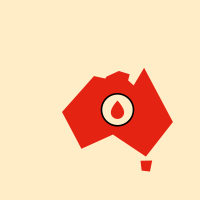
Want to know which is the rarest or the most common blood type in Australia?
More than a third of people who donate blood for the first time have the most common type, while other types are far more rare. Where does yours fall?
4 Column Icon Component

Blood type: O+
% of population: 38%
More than a third of Australians are O+. You’re popular, versatile and a life-saver (you’ve got it all).

Blood type: O-
% of population: 7%
Fewer than 1 in 14 Aussies have O- blood, but it can be given to anyone. You’re a big deal!

Blood type: A+
% of population: 32%
With such a popular blood type, you’re a high performer of the best kind — the kind who saves lives.

Blood type: A-
% of population: 6%
There aren’t many A- donors out there, but they’re flexible. By giving blood or plasma, you can help almost anyone.

Blood type: B+
% of population: 12%
B+ plasma can be given to 60% of people. There may not be many of you, but you make a big impact.

Blood type: B-
% of population: 2%
There aren’t many B- donors out there. You’re a rare find, and a real gem.
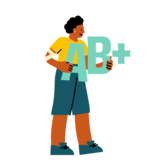
Blood type: AB+
% of population: 4%
AB+ donors are real crowd pleasers. Your plasma can be given to anyone.

Blood type: AB-
% of population: 1%
The rarest of them, AB- donors are powerful. Your plasma can be given to anyone.
Percentages do not equal 100% due to rounding.
*Percentages are based on patient pathology results provided across Australia in 2019. Data available at https://onlinelibrary.wiley.com/doi/10.5694/mja2.51429
Why are blood types important?
When someone is given a blood transfusion, it’s best to give them blood that’s the same type as their own. If that isn’t available, they can be given other compatible blood types depending on their own blood type.
| Blood type of a patient | Compatible blood types |
|---|---|
| O- | O- |
| O+ | O-, O+ |
| B- | B-, O- |
| B+ | B+, B-, O+, O- |
| A- | A-, O- |
| A+ | A+, A-, O+, O- |
| AB- | AB-, A-, B-, O- |
| AB+ | AB+, AB-, A+, A-, B+, B-, O+, O- |
For the fine detail on blood types, check out our research article 'Blood types and doughnuts: What are blood types and why do they matter?'
Know your blood type?
See whether to donate blood or plasma

You may also like
Plasma
Want to help more people, more often? The answer is plasma. Find out how it can be used in 18 life-changing ways!
Learn about plasma
Platelets
They may be tiny, but they make a huge difference for seriously ill patients.
Learn about platelets
What's my blood type?
Don't know your blood type? Book a donation, and we'll be able to tell you.
Find a donor centre