


Blood donor research: The human side of blood donation
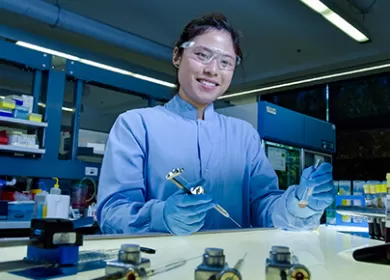
"Blood donor research? What’s that?” It’s a question we face, every time we meet someone new. When we tell someone we work as researchers at Lifeblood, we usually get people imagining us in a lab coat with microscopes.
But here’s the thing, we don’t look at the blood itself.
We investigate one of the most important parts of blood donation. The donor!
Why do they choose to save lives? What might stop them from donating? How can we make their donation safer? Our multidisciplinary team with backgrounds in psychology, sociology, public health, epidemiology, clinical research, nursing, cellular biology and marketing work to answer these questions. Our job is to find ways to:
- Make it easier to return to donate
- Find new blood donors
- Tell donors about the different ways they can donate blood
Here’s some of the ways we’re doing this:
Why older donors matter
If donating blood was a competition, donors over 55 would win. They’re typically better prepared, return to donate sooner, and have fewer adverse events than their younger counterparts. However, only 13% of first-time donors are aged 50 and over and represent less than 24% of all blood donors.
The under-representation of these donors means there is a great opportunity to fill an important gap in the supply of life-saving blood. We’re exploring what makes donors over 55 tick and how to encourage more of them to donate. We talked to donors, non-donors, and Lifeblood Donor Centre team members to find out what helps – and what stops – people over 55 from donating blood.
Across several studies we found that health conditions, finding a way to the donor centre, and just a simple lack of time due to family or carer responsibilities were things that got in the way of donating. Adults over 55 said that seeing themselves in marketing and advertising would encourage them to donate: “I want to see others my age in the ads. Otherwise, I’ll assume donating is only for those with better knees”. We listened.
Needles, nerves, and everything in between
We get it. Donating blood can be scary, and you’re not alone. But what part of the donation process makes those hairs on your arm stand up straight? And how can this be overcome? That’s what we’re working to find out.
Through research interviews, we found that the most common concerns were feeling nervous about needles, the sight of blood, and having a bad reaction after donation. These concerns were often formed after having a bad donation experience, or from hearing someone else’s scary story at a family barbecue.
We also found that prospective donors (people who are interested in donating but haven’t yet done so) are not necessarily afraid of needles. They’re often concerned about all the ‘unknowns’ that come with donating for the first time. Donors and non-donors asked for tools to overcome these concerns. So we tested an in-person workshop designed by clinical psychologists. They used evidence-based strategies like education about emotional states and gradually exposing yourself to blood donation (like watching a video). Participants also set a blood donation goal and created a personalised strategy to achieve it. These workshops had participants feeling more confident, less scared, and one step closer to saving a life.
We’re continuing to investigate new ways to everyone feel comfortable on their donation journey.
The Australian Blood Donor Study
They say there is safety in numbers. Maybe they should say there are research findings in numbers. Over 9,000 donors have joined the Australian Blood Donor Study (ABDS) to help us build a library of data and blood samples called the ABDS biobank.
The biobank is one of the largest studies Lifeblood has undertaken. It’s an ongoing piece of research that gives Lifeblood researchers a vital resource to continue making scientific discoveries about blood donation and blood transfusion. And we haven’t even got to the part about improving the diagnosis, treatment, and prevention of human diseases.
Donors have been the key to this massive undertaking. As of March 2025, they’ve donated over 6,000 blood samples and completed surveys across three years. Talk about saving lives over, and over, and over…
Making donation easier, one insight at a time
The next time someone asks us “what do you do for work?” we will say “We make it easier for people to save lives”.
You may also like