


Become a Lifeblood scientist these school holidays
Discover the amazing world of blood types with a simple experiment you can try at home.
What is a blood type?
There are eight basic blood types that most people know about: A, AB, B and O. Each can be positive or negative. Blood types are matched between donors and recipients to prevent a transfusion reaction, which could be dangerous for the patient. This matching process involves testing which antibodies a recipient has in their plasma and comparing that to the antigens on a donor’s red blood cells.
For example, an A type donor means their red blood cells have A antigens on them. A type blood can’t be given to a B type recipient, who carries anti-A antibodies in their plasma. If anti-A antibodies find a red blood cell with A antigens, that can cause a transfusion reaction.
So that’s why we carefully check the blood type of every donation. And now you can have a go too.
Try this at home, no lab coat required
We’ve written a short experiment for you to try at home. Don’t worry, you won’t need special science equipment! This experiment uses regular household ingredients like milk and vinegar.
Ready to become a Lifeblood scientist for a day? Download our instructions
More on blood types
- What determines my blood type?
Blood types are very similar to characteristics like eye or hair colour. They’re determined by the genes we inherit from our parents. That also means they’re linked to our ethnic ancestry. Where our ancestors come from is one major factor influencing the make-up of our blood, and each region has its own unique mix of blood types.
It’s important that the blood types of Australian donors reflect the blood types of Australian patients. Our research shows ethnic diversity of blood types in donors is increasing, and we need to keep ensuring Australia’s blood supply matches what hospitals need.
- How do I find out my blood type?
It’s easy. All you have to do is book a donation, and after you donate for the first time, we’ll contact you to let you know your blood type. When you return for a second donation, we’ll give you a keyring featuring your blood type. It’s a handy way to remember your type and a great conversation starter for encouraging your mates to donate too.
If you’re already a donor, you can see your blood type on your physical or in-app donor card, or by logging in online and clicking on ‘My details’ then ‘Health statistics’.
- Who else has my blood type?
Over a third of all Australians have O+, the most common blood type. Another popular type is A+, carried by 32% of the population. At the rarer end of the scale, O- is only 7%, and people with AB- blood are the rarest at only 1% of the population! Check out this page for even more information about blood types.
- How many blood types are there?
As of August 2026, scientists around the globe have discovered a whopping 49 different blood types! All of them are determined by our genes.
The ABO blood group system was the first to be described in the early 1900s. The RhD antigen, which gives us the positive or negative symbol shown after an ABO blood type, was reported in 1940.
Other blood types include the Kidd, Duffy or Kell systems. The number is climbing – in the last 20 years, there’s been another 20 blood types uncovered, including discoveries from our own Lifeblood researchers.
Learn more about the wonderful world of blood types and antigens here.
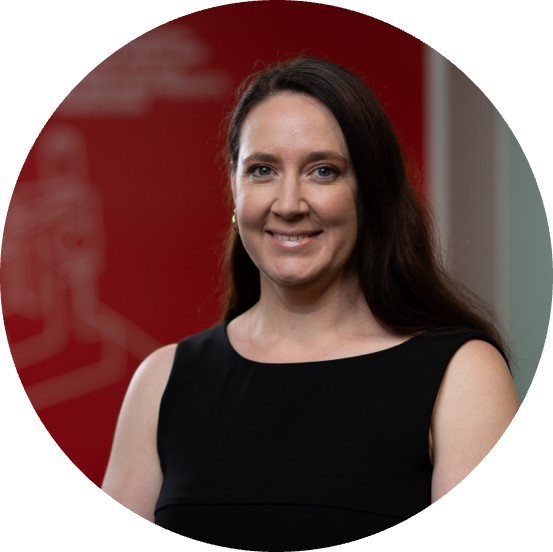
Doctor Kelly Winter
Senior Research Fellow
Kelly’s research focuses on improving blood component quality and manufacturing efficiencies and extending the shelf-life of blood components.Kelly received her PhD in Phytochemistry and Pharmacology and Graduate Certificate in Research Management from Southern Cross University, and previously worked at Southern Cross Plant Science screening for bioactive compounds.

Doctor Patrick Capon
Research Engagement and Communications Lead
Patrick is a science communications specialist who's passionate about the role of science communication in increasing research impact. He works closely with all Lifeblood researchers to translate their research into meaningful content and enable anyone to connect with our outcomes - whether that's scientists, journalists, donors, or the wider community.Patrick holds a PhD in Chemistry, is an award-winning presenter, and has experience in medical writing and science communication for audiences ranging from school students to medical professionals.
You may also like